


Recovering after plastic surgery is just as important as the procedure itself. While choosing a skilled surgeon and an accredited hospital lays the foundation for great results, your actions after surgery play a crucial role in healing, comfort, and long-term outcomes.Many complications after cosmetic surgery don’t happen in the operating room—they happen during recovery due to simple mistakes, misinformation, or rushing the process.This guide outlines the top 5 do’s and don’ts after plastic surgery, helping you heal safely, reduce risks, and protect your results.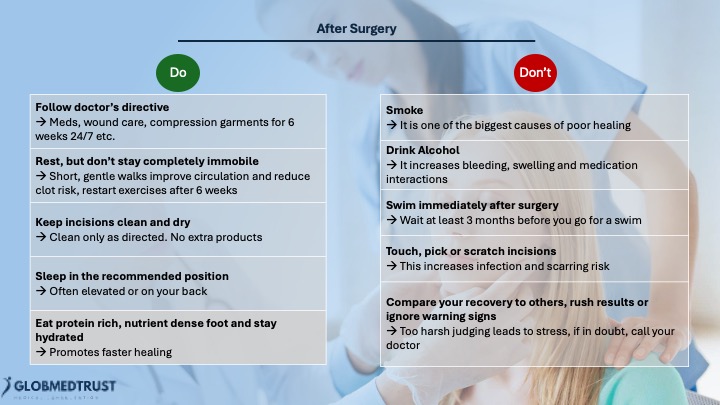
Why Post-Surgery Care Matters
Plastic surgery places controlled stress on the body. Your immune system, circulation, and tissues need time—and the right conditions—to heal properly. Following post-operative guidelines can:- Reduce swelling and bruising
- Lower infection and scarring risk
- Improve final aesthetic results
- Speed up recovery safely
- Prevent avoidable complications
The Top 5 Things You Should Do After Plastic Surgery
1. Follow Your Doctor’s Instructions Precisely
Your surgeon’s instructions are not suggestions—they are medical protocols tailored specifically to your procedure and body.This typically includes:- Taking prescribed medications on schedule
- Proper wound care and hygiene
- Wearing compression garments as advised (often 24/7 for several weeks)
- Attending follow-up appointments
2. Rest — But Don’t Stay Completely Immobile
Rest is essential, but complete immobility increases the risk of complications such as blood clots.What’s recommended:- Short, gentle walks starting early (as approved by your doctor)
- Light movement to promote circulation
- Avoiding strenuous exercise until cleared (often 4–6 weeks)
3. Keep Incisions Clean and Dry
Incision care is one of the most critical aspects of recovery.Best practices include:- Cleaning only as instructed
- Avoiding unapproved creams, oils, or home remedies
- Keeping the area dry and protected
4. Sleep in the Recommended Position
Sleeping position directly affects swelling, comfort, and incision healing.Most patients are advised to:- Sleep on their back
- Keep the upper body elevated
- Avoid pressure on surgical areas
5. Eat Nutritious, Protein-Rich Food and Stay Hydrated
Your body needs fuel to heal.Focus on:- Protein-rich foods to support tissue repair
- Vitamins and minerals from whole foods
- Adequate hydration to reduce swelling and fatigue
The Top 5 Things You Should Not Do After Plastic Surgery
1. Don’t Smoke
Smoking is one of the leading causes of poor healing after surgery.It:- Reduces blood flow
- Delays wound healing
- Increases infection and scarring risk
- Raises the chance of complications
2. Don’t Drink Alcohol During Early Recovery
Alcohol can interfere with healing by:- Increasing bleeding and swelling
- Interacting negatively with medications
- Dehydrating the body
3. Don’t Swim Immediately After Surgery
Pools, oceans, and hot tubs expose healing incisions to bacteria.In most cases:- Swimming should be avoided for at least 6–12 weeks
- Incisions must be fully healed before water exposure
4. Don’t Touch, Pick, or Scratch Incisions
Even if itching occurs:- Do not scratch or pick scabs
- Avoid touching incisions unnecessarily
5. Don’t Compare Your Recovery to Others or Rush Results
Every body heals differently.Avoid:- Comparing your swelling or scars to others
- Panicking over early results
- Ignoring warning signs